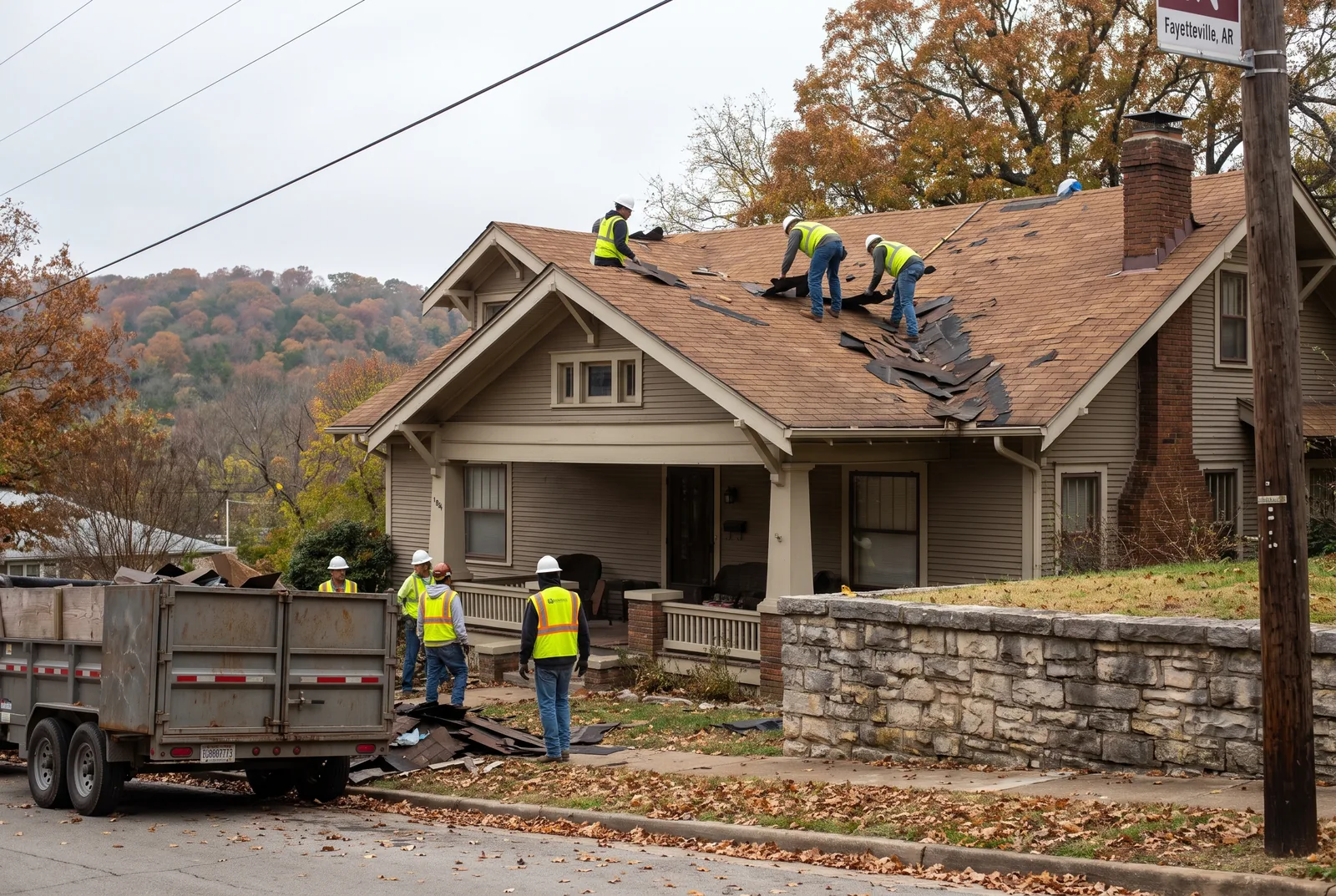
Ozark roofs, built for hail, ice and hundred-degree Julys.
Roof repair, hail and storm damage, replacement, Class 4 shingles, metal roofing and 24/7 emergency tarping across Fayetteville and Northwest Arkansas — by a registered, bonded, insured local roofer that inspects before it sells, photographs everything, and never asks you to "skip" the deductible.
Arkansas-registered residential roofer · $15,000 surety bond · Insured · Free inspections with photos · Written price before a shingle moves
A roofing company built for the Ozark storm calendar
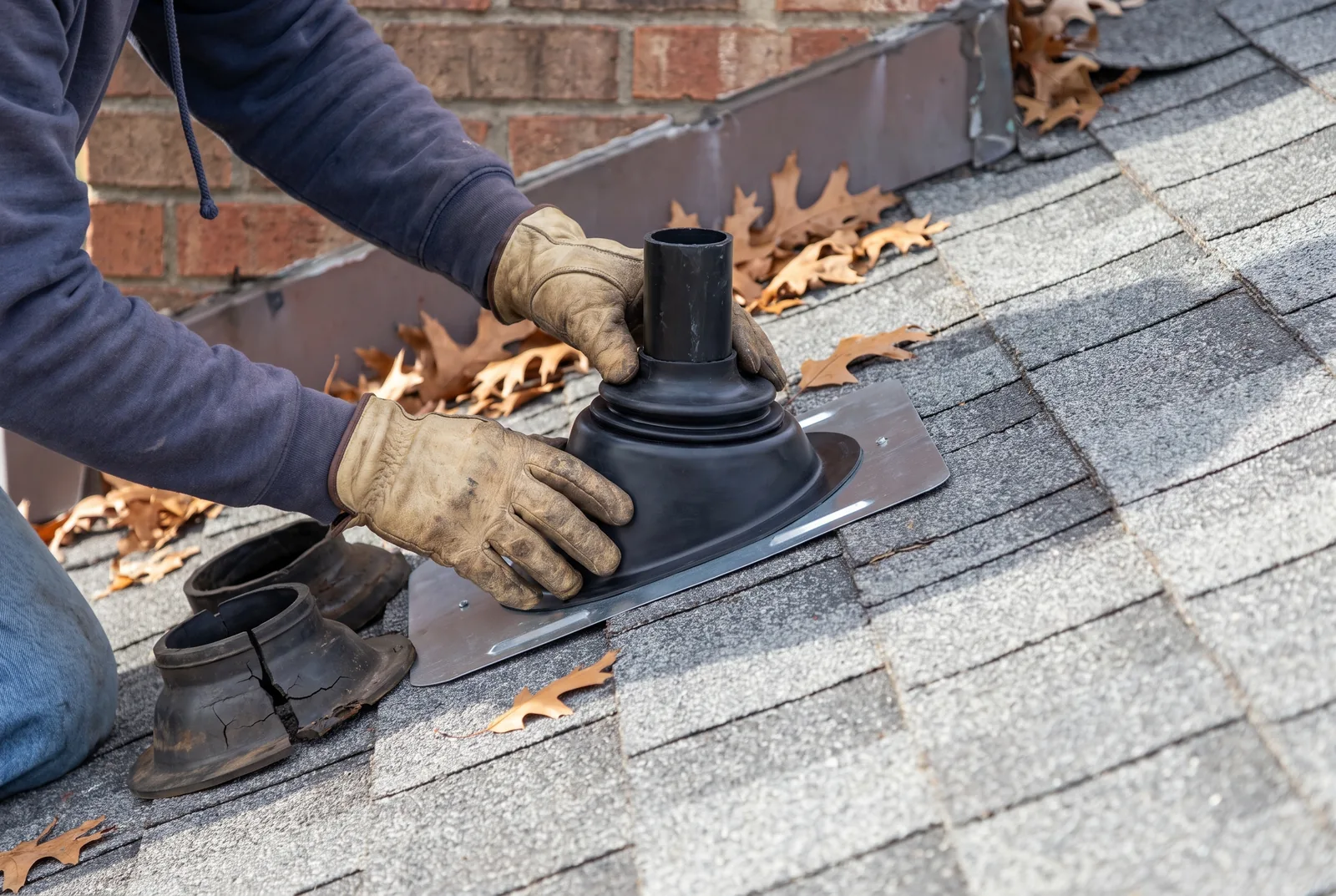
Roof repair & leaks
Cracked pipe boots, caulked-over step flashing, wind-lifted courses, nail pops — traced from the attic, fixed once, photographed before and after.
Repairs & pricing →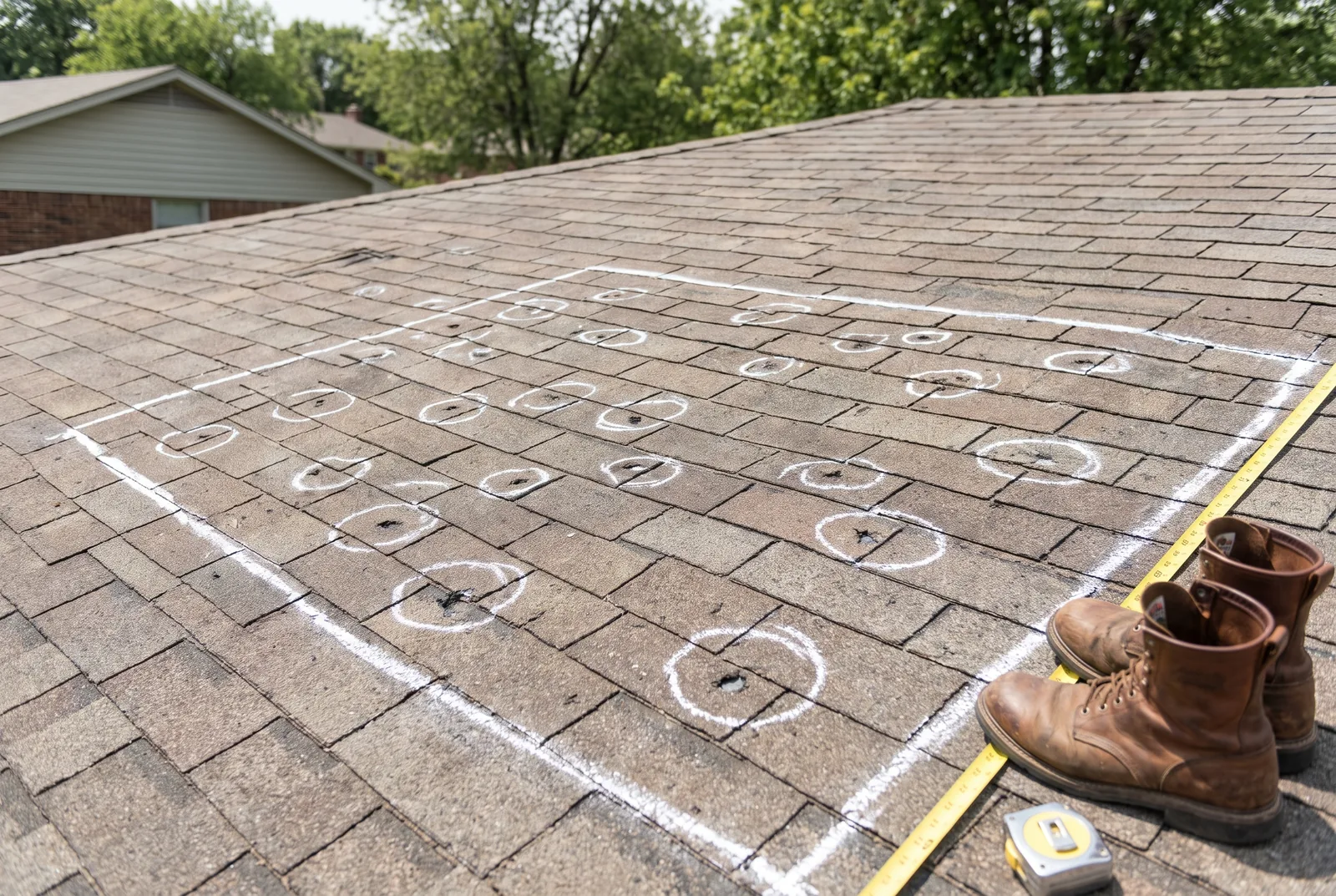
Hail & storm damage
Chalk-marked test squares, a dated report tied to the storm that did it, and an estimate your adjuster can actually work from.
Hail & wind →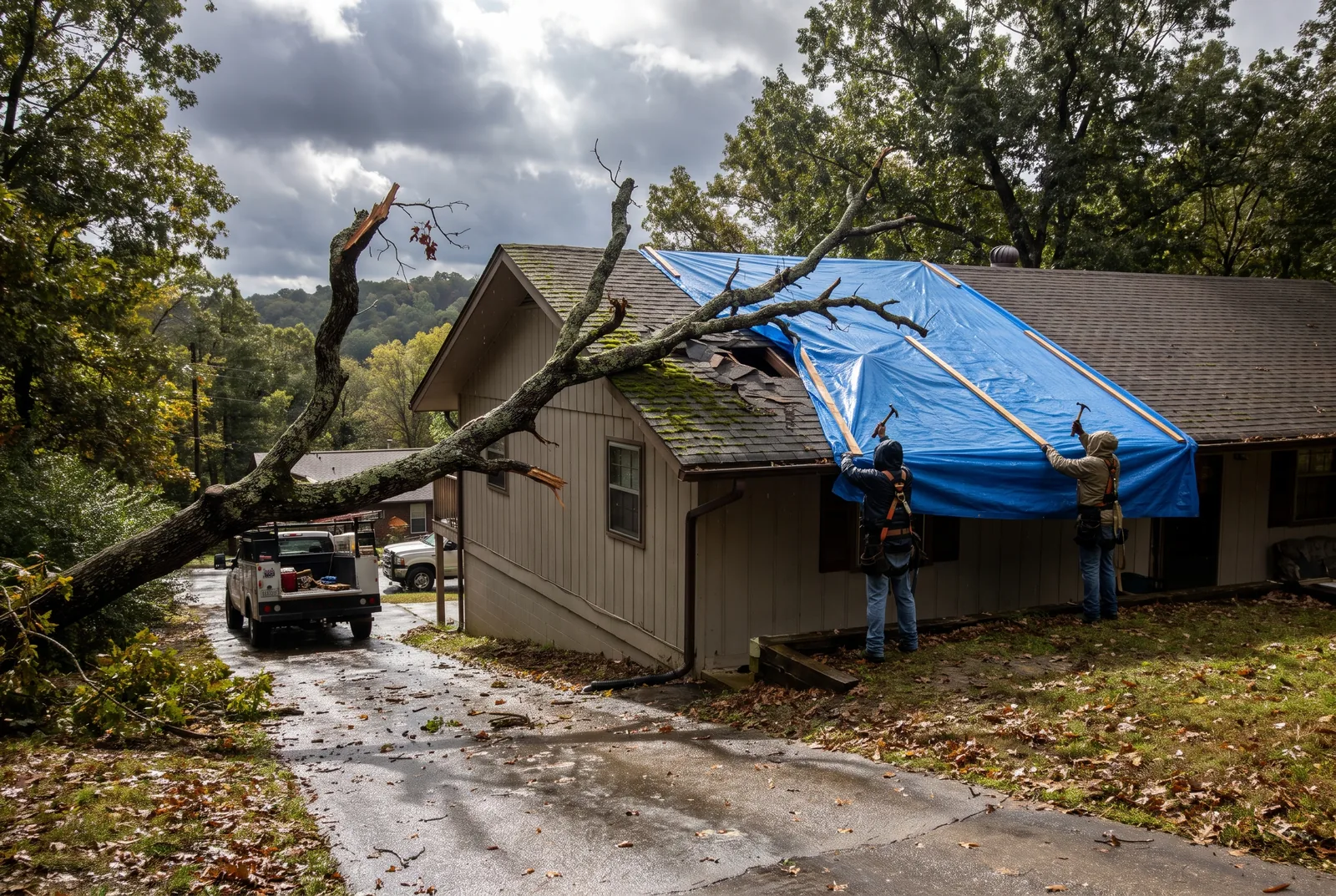
24/7 emergency roof repair
Tarped tonight, repaired in daylight. Oak limbs through the deck, wind-stripped slopes, ice-dam leaks — any hour.
Emergency service →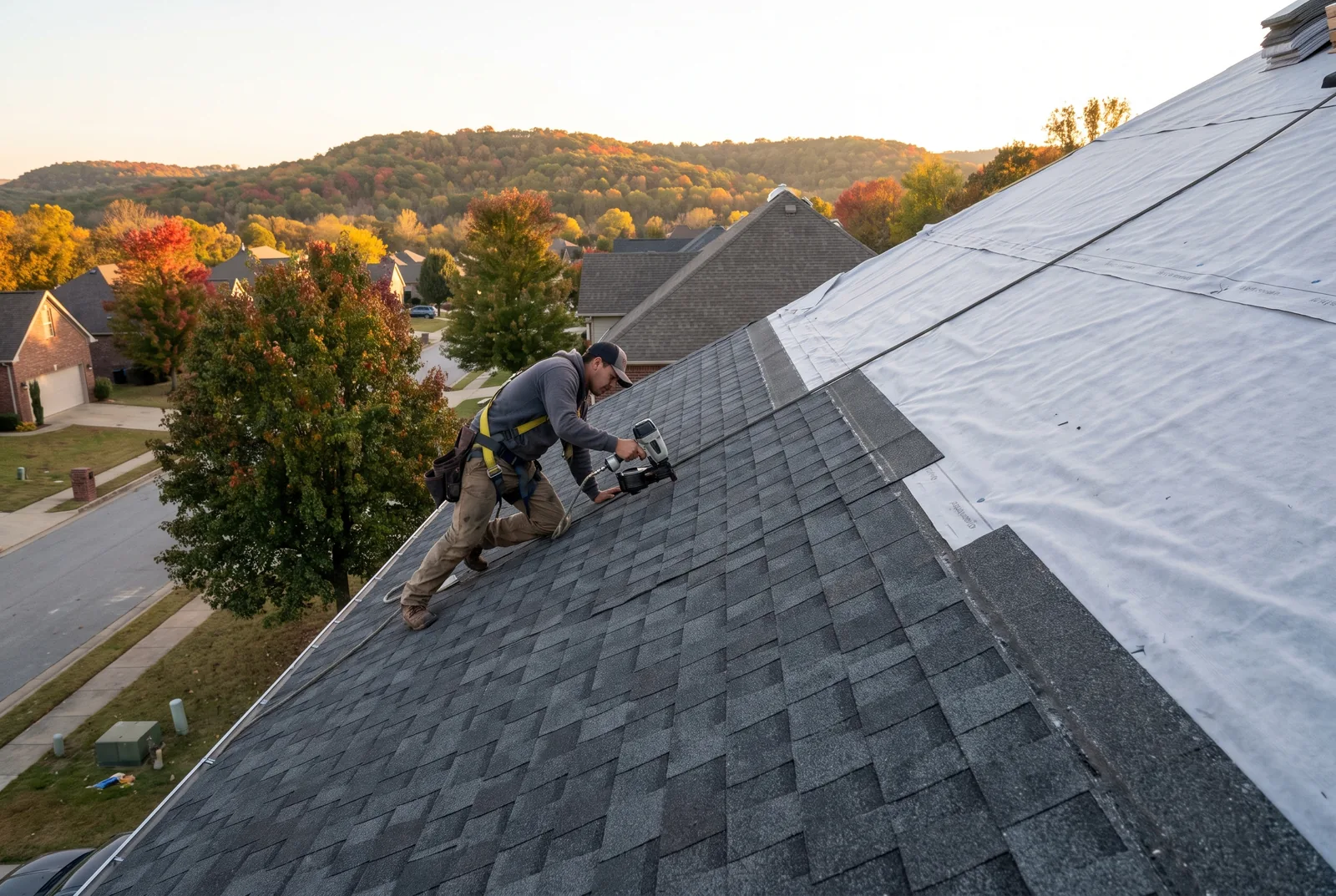
Roof replacement
Tear-off to the deck, soft decking replaced, synthetic underlayment, ice barrier at the eaves, ridge vent, permit pulled. Most homes in a day.
Replacement →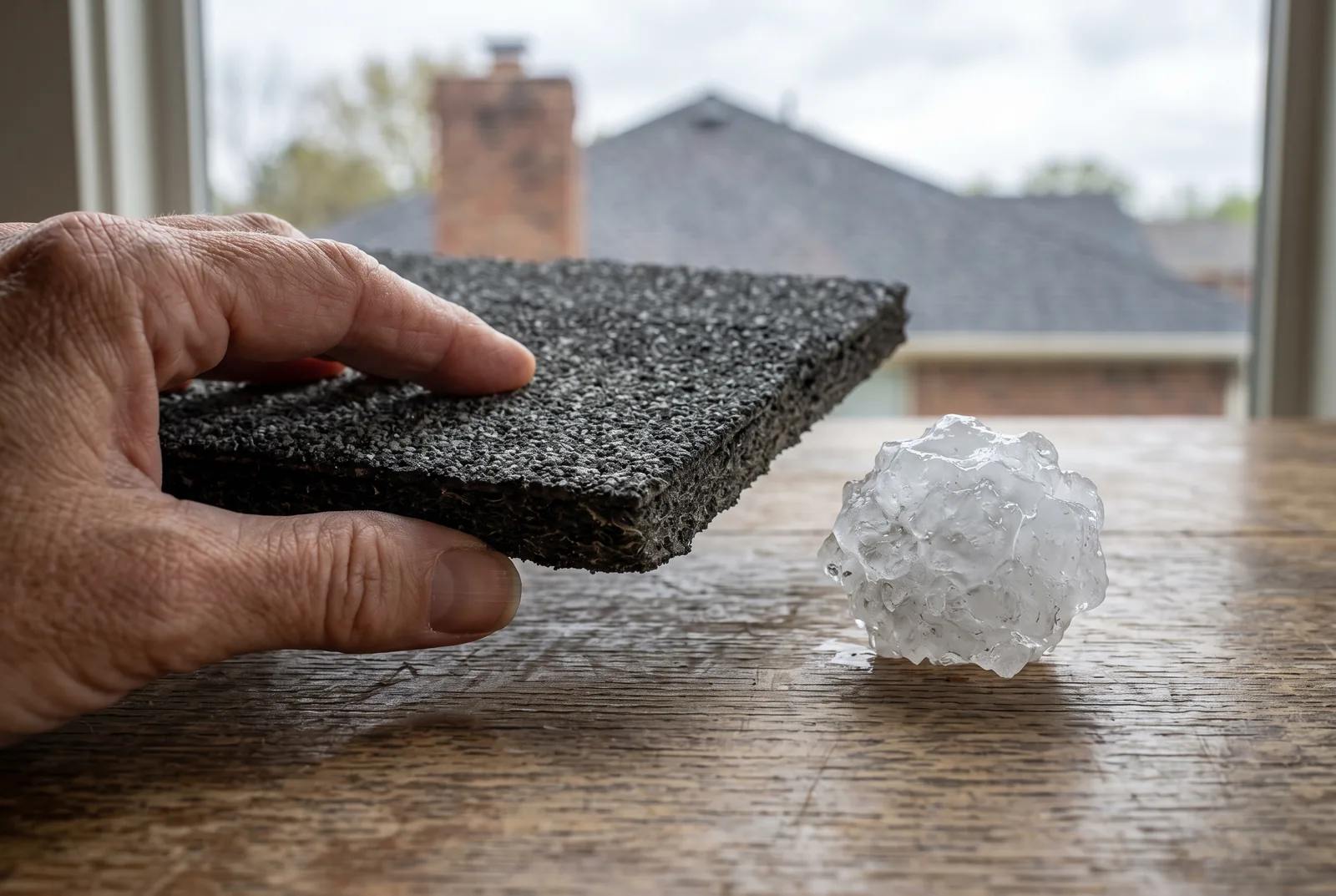
Class 4 shingle roofing
UL 2218 impact-rated shingles that shrug off inch-and-a-half hail, with the certificate your insurer wants for the discount.
Class 4 shingles →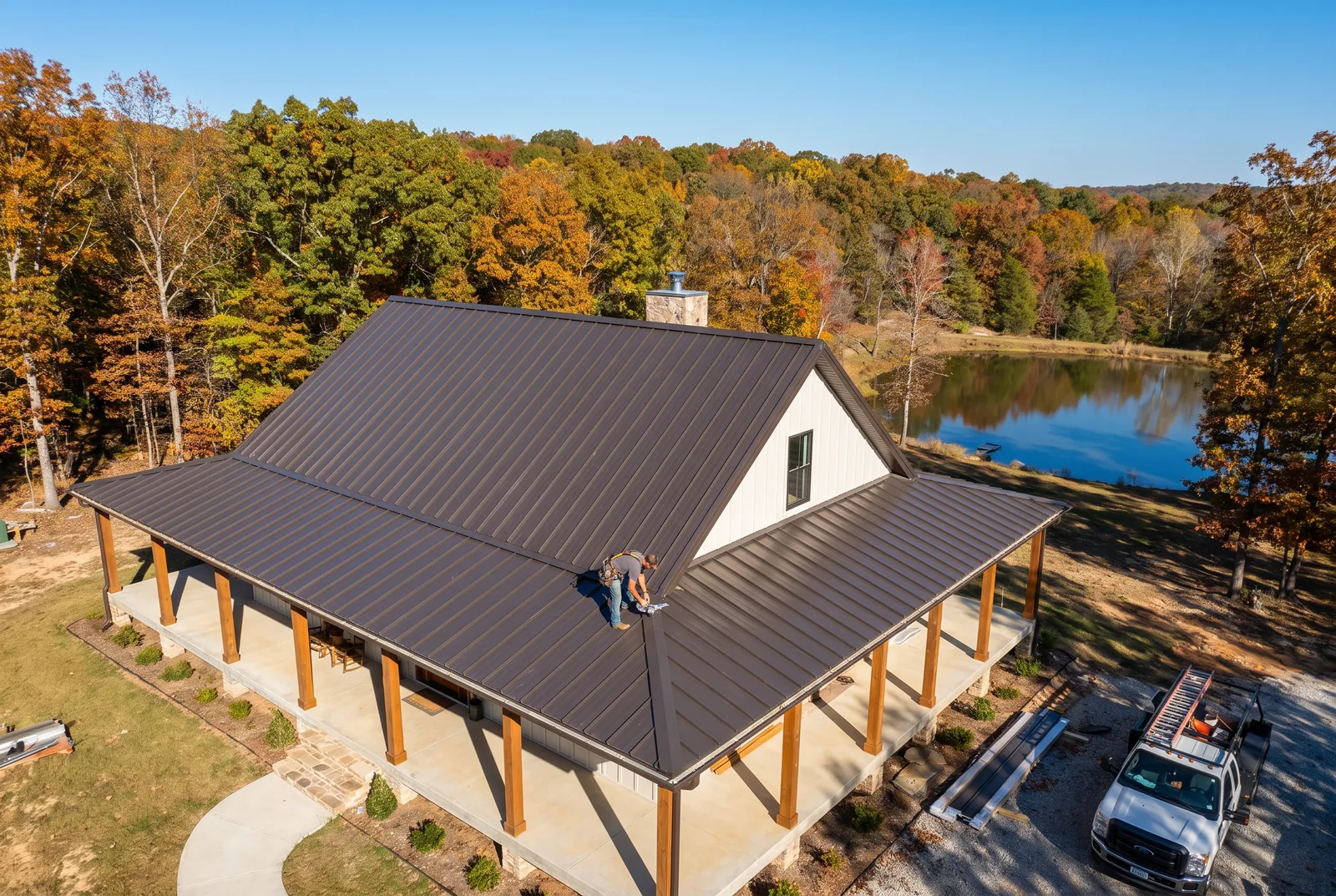
Metal roofing
Standing seam for the house, exposed-fastener panel for the shop and barn, stone-coated steel when you want both looks — built for ice load and 50-year hail.
Metal roofs →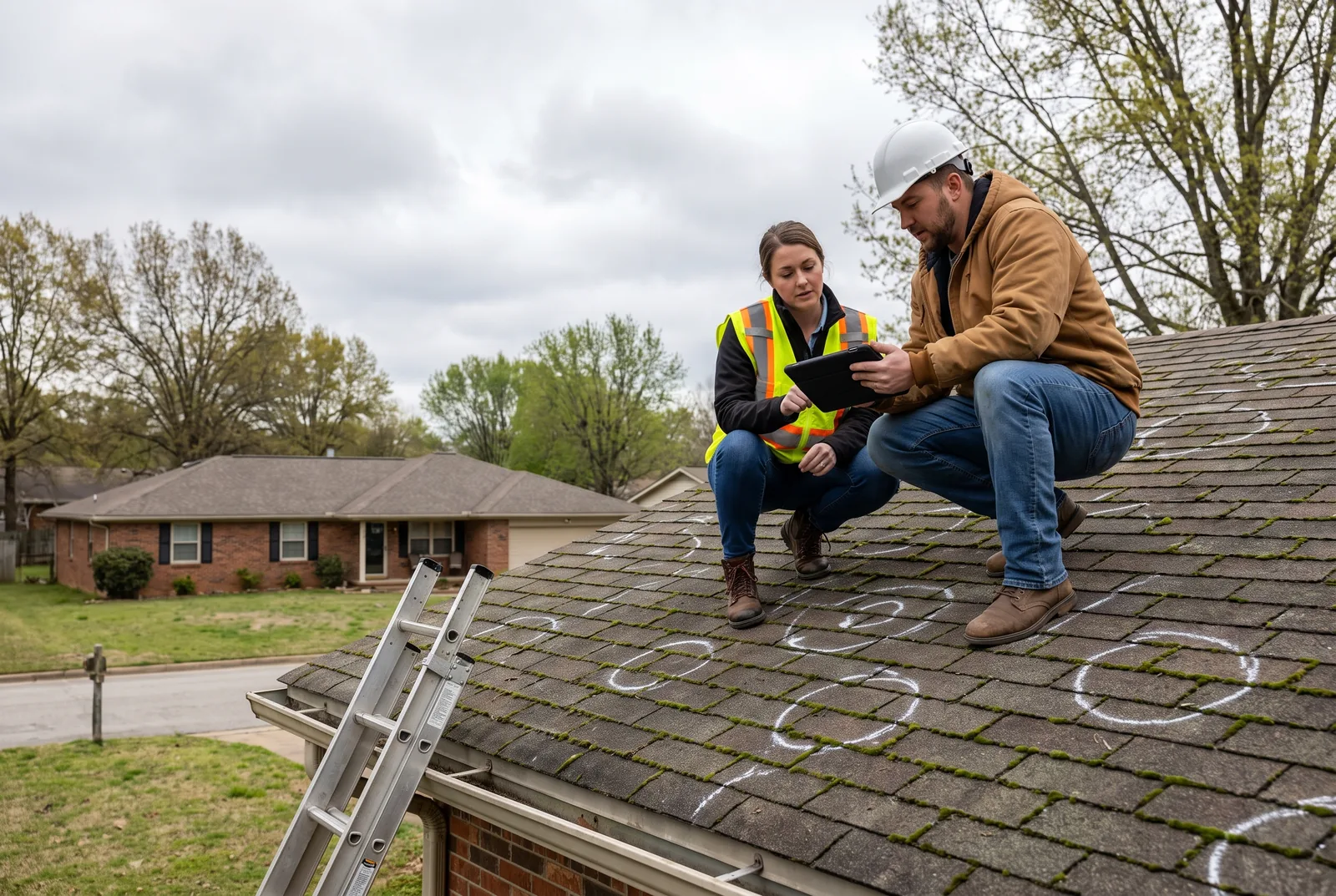
Roof insurance claims
Photos, measurements and a storm report before you file, a walk-through with your adjuster, and a build to the approved scope. Deductible is yours, always.
Claims help →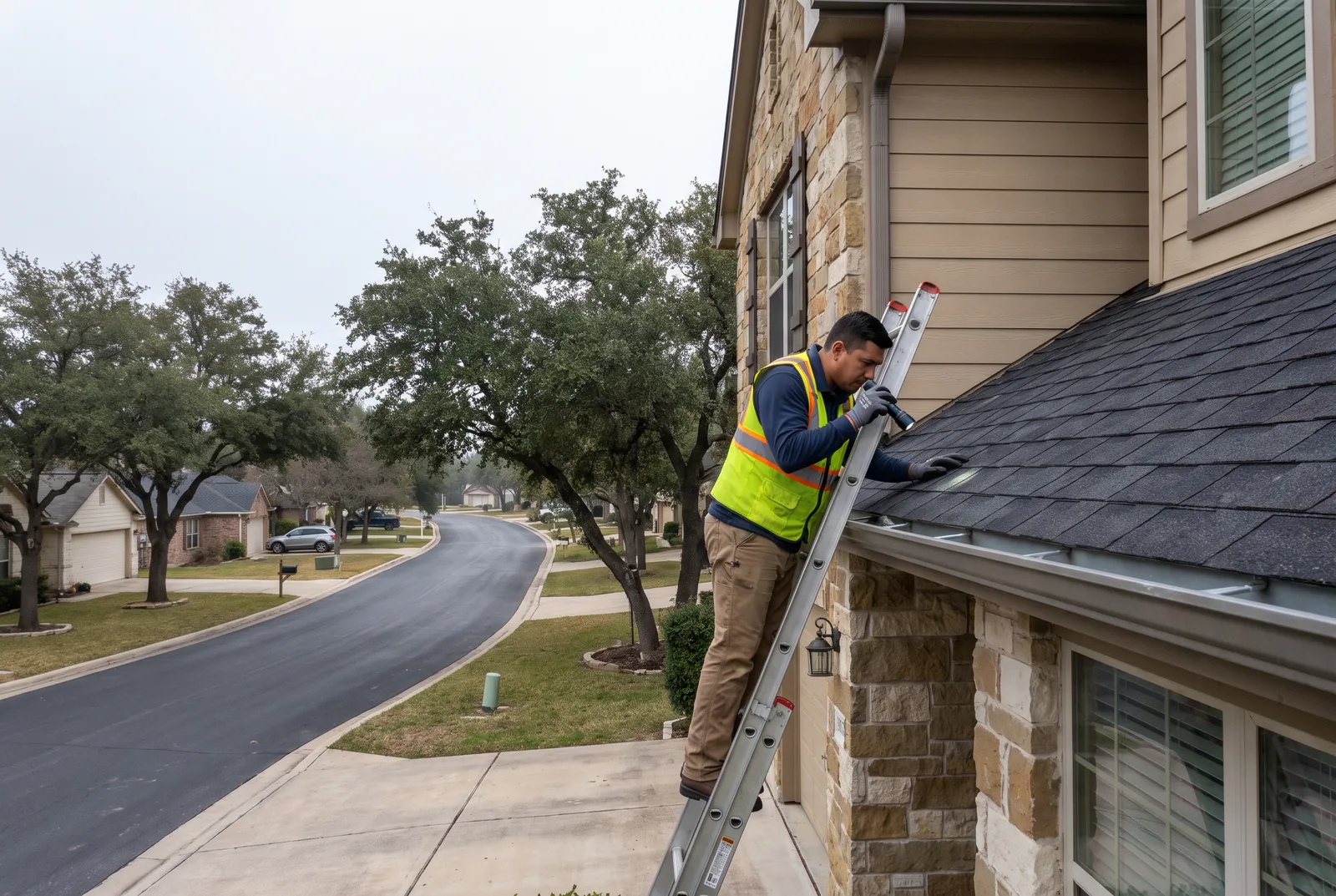
Roof inspections
Free storm inspections, pre-listing and pre-purchase reports, and honest "it's fine, call us in five years" answers when that's the truth.
Inspections →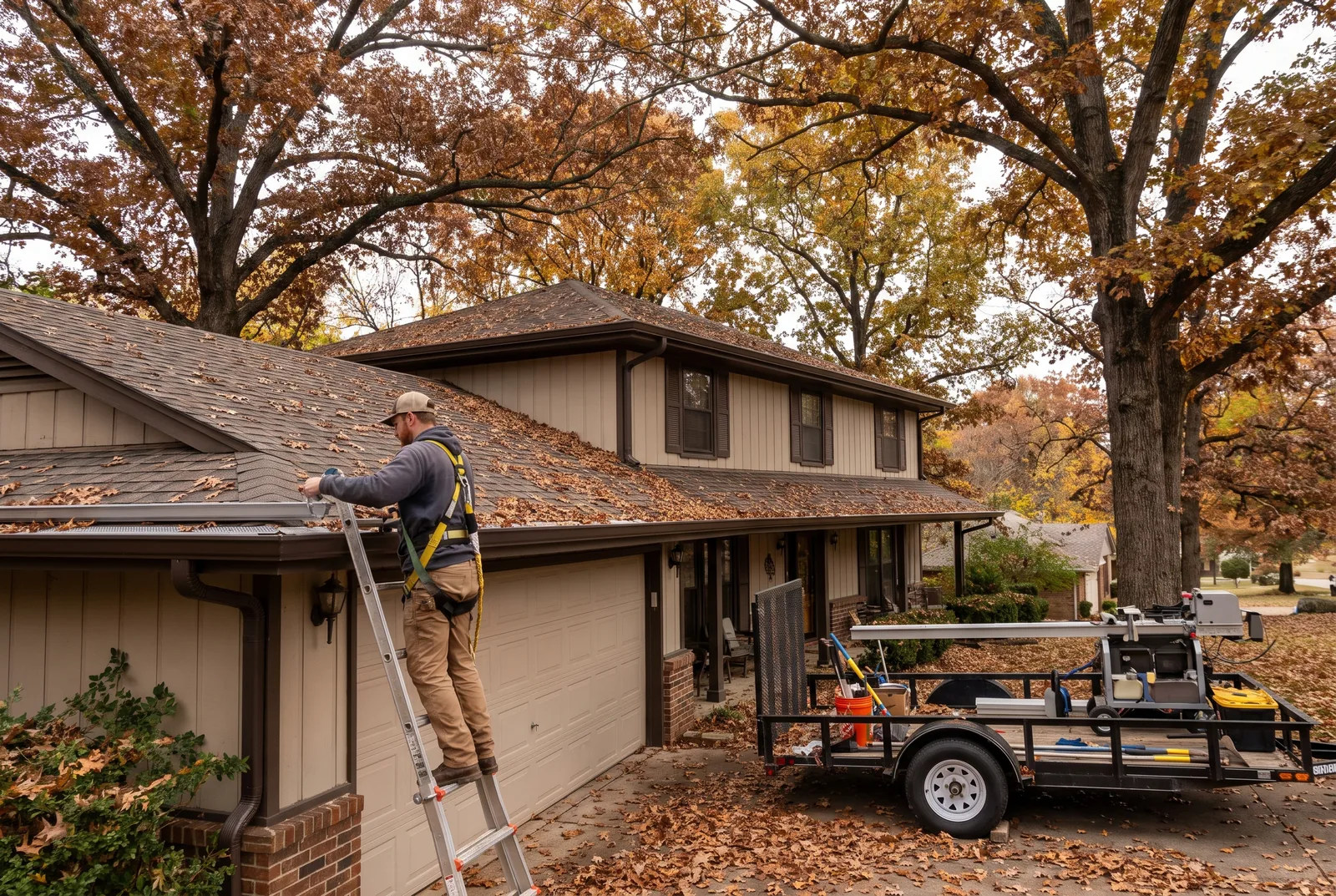
Gutters & leaf guards
Seamless gutters sized for Ozark downpours and guards that actually handle oak and hickory litter.
Gutters →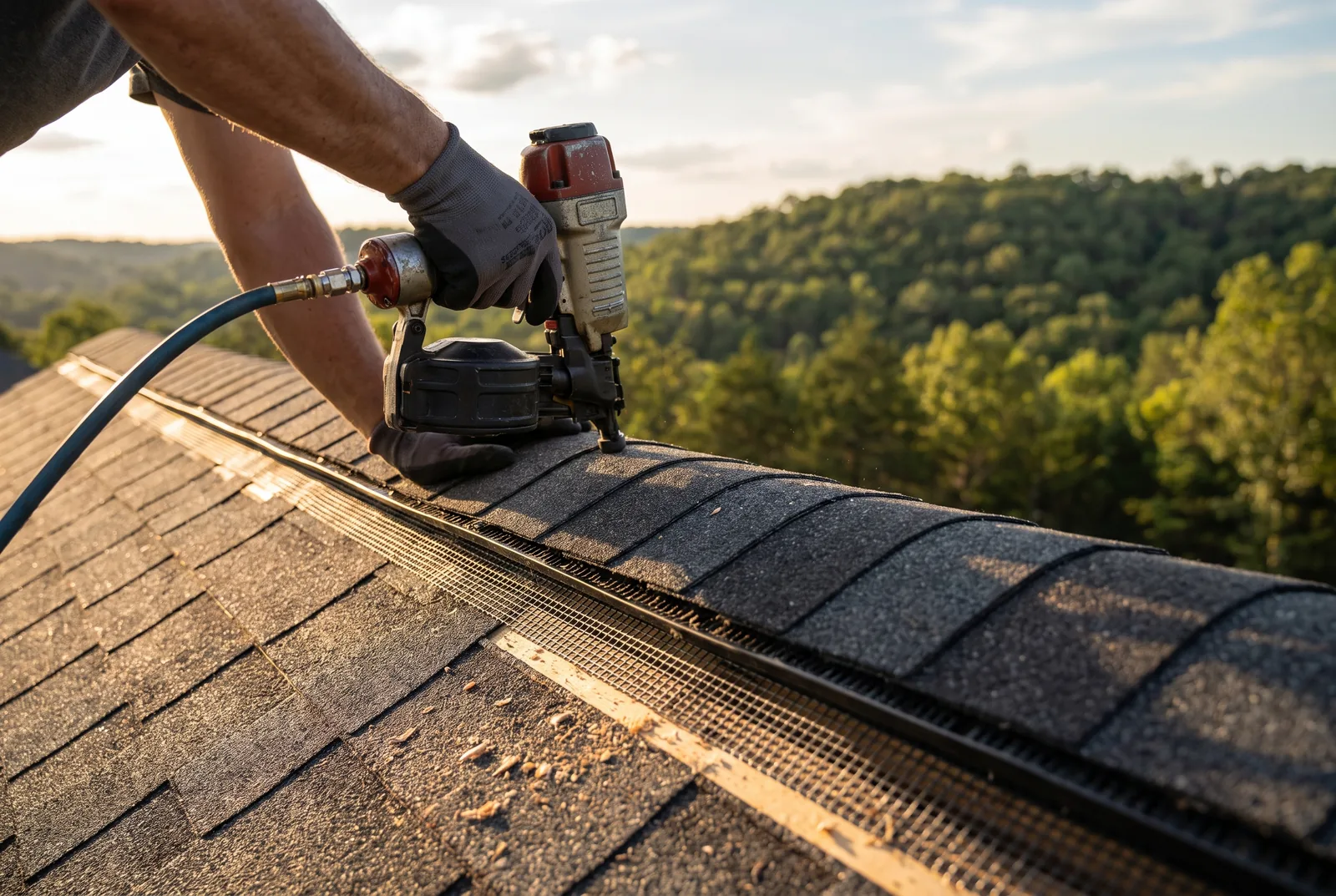
Attic ventilation & ice dams
Ridge and soffit venting that keeps a 140° attic from cooking shingles in July and freezing water at the eaves in January.
Ventilation →Three numbers that decide most Northwest Arkansas roof calls
Hail season here runs March through June, and every year some part of Washington or Benton County gets a storm that bruises roofs. Whether yours needs a claim, a repair or nothing at all comes down to these.
The size that bruises a shingle
Quarter-sized hail (1 inch) starts bruising the mat on an aging architectural shingle; 1½-inch hail bruises almost any standard shingle; 2-inch hail cracks the mat outright. May 18, 2025 put 1¾-inch stones on Springdale. We test-square every slope and count hits, because a handful is a repair and eight per square is a roof.
How long "replacement cost" lasts now
After Arkansas insurers lost three in-state companies in 2023, most policies here now pay full replacement cost on a roof for only about seven years, then depreciate it, and many add a separate wind/hail deductible. Knowing your roof's age and your policy's schedule before you file changes what you'll actually get.
The line where the law kicks in
Any residential roofing job over $2,000 in Arkansas must be done by a roofer registered with the Contractors Licensing Board and bonded for $15,000. Storm chasers working out of a truck after a hail day usually aren't. Ask for the registration number; we print ours on every contract.
Four things that keep our phone ringing
Hail bruises
Supercells climb the Boston Mountains every spring. A bruise doesn't leak the day it lands — it leaks two summers later when the mat cracks. If a storm crossed your address, it's worth a free look before the next one does.
Hail damage →Oak & hickory limbs
Fayetteville is a city in a forest. Ice storms, straight-line wind and the May 2024 outbreak all dropped limbs through decking. We tarp it tonight and rebuild the deck, not just the shingles.
Emergency repair →Flashing & pipe boots
The rubber collar on a plumbing vent splits after a dozen Arkansas summers, and caulk over old step flashing fails in three. Nine of ten "mystery leaks" in Wilson Park and Mount Sequoyah are one of these.
Repairs →Ice dams & cooked attics
North-facing eaves under bare oaks freeze and refreeze; unvented attics hit 140°F in July and age shingles ten years early. Both are ventilation problems, and both are cheaper than a roof.
Ventilation →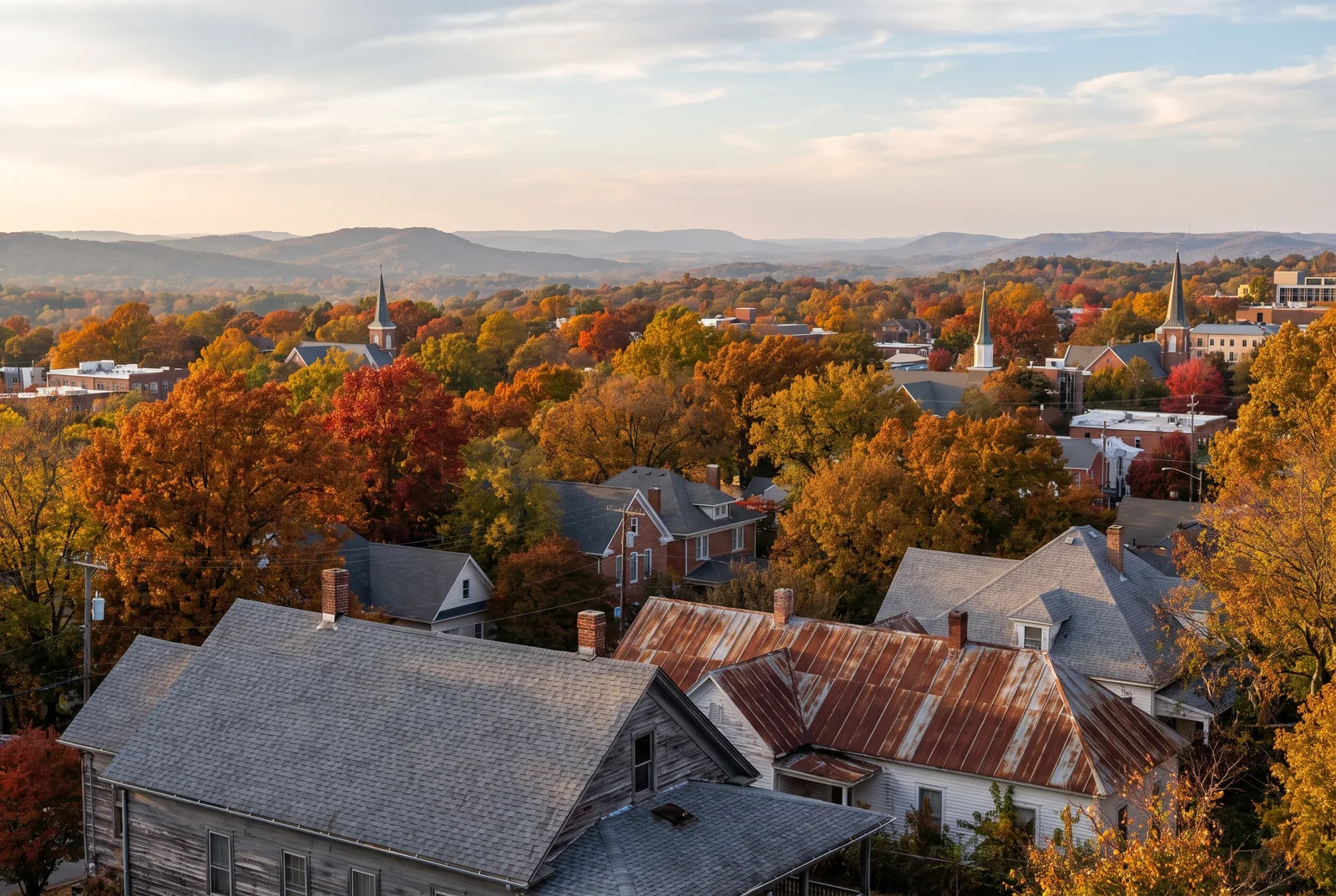
Fayetteville sits on a plateau that makes its own weather
The city is 1,378 feet up on the Springfield Plateau at the northern edge of the Boston Mountains, and the roofs here take all of it: 47 inches of rain a year with May the wettest month, hail-bearing supercells that ride the ridges every spring, straight-line wind off the Oklahoma plains, summers that touch 100°F, and every few winters an ice storm — January 2009 put nearly two inches of ice on Fayetteville, knocked out power to more than 100,000 people for up to two weeks, and dropped 3,000 trees inside the city alone. All of that lands on roofs that are mostly one thing: architectural asphalt shingles, aging under a canopy of oak and hickory that keeps north slopes damp and green with algae.
It's also a city that added more than 12,000 people between 2020 and 2025 and passed 100,000 residents, which means a lot of houses built fast on the I-49 corridor and the west side by crews that were gone before the first hailstorm — and a lot of 1920s bungalows around the square, Wilson Park and Mount Nord on their third or fourth roof. Every storm brings out-of-state trucks that knock doors, offer to "handle the deductible," and vanish when the checks clear.
So we do the boring things right: inspect and photograph before we quote, pull the city permit, tear off instead of overlaying, put ice barrier at the eaves whether the inspector will see it or not, vent the attic so the new roof lasts, and print our Arkansas registration and bond on the contract. And because we're here year-round, we're the crew that answers when the next front rolls through.
Four steps, no surprises
Call or send the form
A leak, a storm date, a roof that's just old — tell us what you're seeing. We answer around the clock.
Free inspection with photos
We get on the roof and in the attic, chalk a test square on every slope, and show you what we found — including when the answer is "it's fine."
Written, itemized price
Tear-off, decking, underlayment, ice barrier, flashing, vents, disposal, permit — every line, good for 30 days. If there's a claim, it's written to the scope your adjuster approves.
Built in a day, cleaned like we weren't there
Most homes are done in one day. Magnet sweep for nails, gutters cleared, before-and-after photos and the warranty paperwork sent the same evening.
From the square and Wilson Park to Mount Sequoyah, the I-49 corridor and Bella Vista
We're across Fayetteville every week: the craftsman bungalows and renovated historics around the Historic Square, Dickson Street, the Washington-Willow and Mount Nord districts and Wilson Park; the mid-century ranches of Midtown; the student blocks around the University of Arkansas and the steep lots of Mount Sequoyah; the newer subdivisions off Crossover Road, Zion Road and Joyce Boulevard on the north side; Hughmount Village and the Mount Comfort and Wedington corridors on the west; and the working-class streets of south Fayetteville toward Kessler Mountain.
Beyond the city we cover Springdale, Rogers, Bentonville, Bella Vista, Lowell, Farmington, Prairie Grove, Tontitown, Johnson, Elkins, Goshen, West Fork and Greenland — all of Washington and Benton Counties.
See the full service area →
Questions Fayetteville homeowners ask us
How much does a new roof cost in Fayetteville?
For a typical 2,000–2,600 square-foot Fayetteville home, a standard architectural shingle roof runs about $11,000–$19,000 in 2026, an impact-resistant Class 4 shingle roof $13,500–$23,000, and a standing-seam metal roof $26,000–$46,000. That includes tear-off, synthetic underlayment, ice-and-water barrier at the eaves and valleys, new pipe boots and step flashing, ridge venting, disposal and the city permit. Steep Ozark pitches, a second layer to tear off, soft decking and a lot of hips and valleys all move the number, and you get every line of it in writing before anyone climbs.
Does my roofer have to be registered in Arkansas?
Yes. Since January 1, 2022, any residential roofing contractor doing a job over $2,000 in Arkansas has to be registered with the Arkansas Contractors Licensing Board and carry a $15,000 surety bond — a bond you can claim against if a roofer takes your money or leaves a bad job. Commercial work of $50,000 or more needs a separate commercial license. You can verify any roofer by calling the board at (501) 372-4661. We're registered, bonded and insured, and the numbers go on your contract.
Do I need a permit to replace my roof in Fayetteville?
In the city of Fayetteville, yes. A roof-covering replacement is one of the most common building permits the city's Development Services office issues, and it's filed through the city's online permit portal. The permit is how the city holds the job to the Arkansas Fire Prevention Code (the state's version of the International Residential Code) — no more than two layers of shingles, proper underlayment and flashing, and drip edge. We pull it, it's on the invoice, and a repair that doesn't change the roof covering usually doesn't need one. Springdale, Rogers and Bentonville each have their own rules and we handle those too.
How much hail does Northwest Arkansas actually get?
Enough to have a season. Spring supercells ride up the Boston Mountains most years between March and June — May 18, 2025 alone dropped 1¾-inch golf-ball hail on Springdale, 1¼-inch on Johnson and inch hail on Tontitown, all within ten miles of the Fayetteville square, and April 20, 2025 brought hail and an EF-1 tornado through Hughmount Village on the city's west side. The May 26, 2024 outbreak put EF-2 and EF-3 tornadoes through Rogers, Bentonville, Decatur and Centerton with $80 million in property damage. Anything from about an inch up bruises an architectural shingle; two inches breaks it.
Can you waive or cover my deductible?
No, and be careful of anyone who offers. Telling your insurer you paid a deductible you didn't — or hiding it as a rebate, a credit or a 'referral fee' — is insurance fraud in Arkansas, for the contractor and for you. We build the job to the scope your carrier approves, you pay your deductible, and every photo, measurement and invoice we hand you is one an adjuster can check.
Do you really answer at night?
24 hours a day, every day, in the middle of the storm. If water is coming through a ceiling at 2 AM, call — a person picks up, we get a tarp over it, and we come back in daylight to find out what actually happened up there.