Roofing the oldest roofs in Fayetteville — the Square, Dickson Street and the historic districts
Victorians, craftsman bungalows and 1920s hilltop homes with steep pitches, board decking and brick chimneys. We've re-roofed a lot of them; here is what they need.
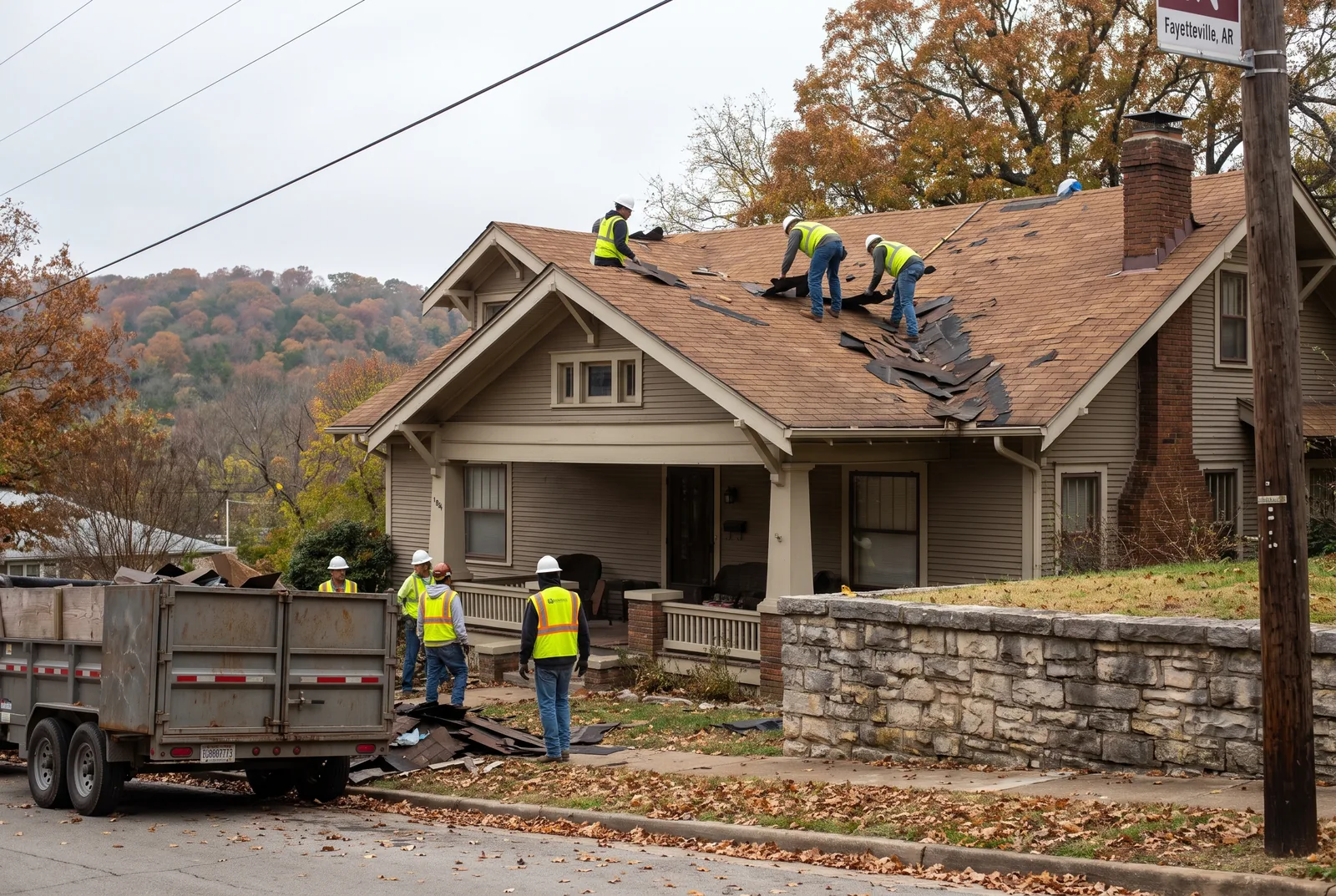
The blocks around the Historic Square, Dickson Street, Wilson Park, the Washington-Willow and Mount Nord districts and the slopes of Mount Sequoyah hold Fayetteville's oldest housing — Queen Anne and folk Victorians from the 1880s to 1910s, craftsman bungalows from the 1910s to 1930s, and the Tudor and colonial revivals that followed. They are the most photographed roofs in the city and the most unforgiving to work on: pitches of 10/12 and steeper, dormers and valleys everywhere, decking made of 1x boards laid a century ago, and chimneys whose crowns and flashing have outlived three roofs.
Roofing these houses is a different job from a subdivision reroof. Board decking with gaps wider than about an eighth of an inch has to be overlaid with new sheathing or the shingle warranty is void; there is often more than one old layer to come off (Arkansas allows two, we take everything to the boards); the chimney usually needs a new crown, cricket and step flashing; and the steep, close-set lots mean roof-jacks, rope work and a careful plan for the porch roof, the neighbor's fence and the 80-year-old oak. We price all of that up front — decking by the sheet, flashing by the piece — and we photograph the boards before they're covered.
What we do in Downtown & Historic Fayetteville
Board-decking overlay
Gapped or rotten 1x decking overlaid with new sheathing so the shingles have something to hold and the warranty holds.
Full tear-off
Every old layer off, down to the boards. The permit requires it and so does the weight the old rafters can carry.
Chimney & flashing
New crowns, crickets, counter-flashing cut into the brick, and the pipe boots that leak on every old roof.
Steep-slope replacement
Architectural and designer shingles, standing-seam metal on porches and dormers, and the right underlayment for a 12/12 pitch.
Ice & snow
Ice-and-water shield at eaves and valleys — north-facing slopes on Mount Sequoyah hold ice for days.
Storm response
Tarps any hour after a limb comes through; we work with the insurer on the claim.
Neighborhoods and areas we cover
- Historic Square & the courthouse blocks
- Dickson Street
- Wilson Park Historic District
- Washington-Willow Historic District
- Mount Nord Historic District
- Mount Sequoyah
- University of Arkansas campus edge
- Markham Hill
- Block Avenue & Maple Street
- Lafayette Street
- Spring Street
- Rock Street & South School
- East Center Street
- Duncan Avenue
Roofing services available in Downtown & Historic Fayetteville
- Roof repair & leaks, hail & storm damage, 24/7 emergency tarping
- Roof replacement, Class 4 shingle roofing, metal roofing
- Insurance claim help, inspections
- Gutters & leaf guards, attic ventilation & ice dams, chimney & flashing
- Commercial & HOA roofing
Questions from Downtown & Historic Fayetteville homeowners
Do historic-district homes need extra approval to re-roof?
The standard City of Fayetteville re-roof permit applies to every house. If your home is in a designated historic district, ask the city whether exterior changes need review before the job — matching the existing material and color is rarely a problem, and we've done plenty of roofs in Wilson Park and Washington-Willow.
What does board decking mean for my price?
Most pre-1950 roofs here are decked with 1x boards. If the gaps are tight and the wood is sound, shingles can go on them; if they're gapped, cupped or rotten — common on the north slopes — we overlay new sheathing at a per-sheet price we quote before the job, not after the tear-off.
Can you keep the look of the old roof?
Yes. Designer shingles that read like slate or shake, standing-seam metal on porches and bays like the originals had, and copper or painted flashing at the chimney. We'll bring samples.
Is a metal roof appropriate on a Victorian?
Historically it's the most appropriate choice — many of these houses started with standing-seam tin. On a steep, cut-up roof it costs more than shingles because of the labor, but it's the roof that will outlast you.
My chimney leaks but the roof is fine — who fixes that?
We do. A cracked crown, missing cricket or rusted flashing is a roofing job, and it's the single most common leak on a historic Fayetteville house.
Nearby: East Fayetteville · West Fayetteville · Springdale · full service area