Attic ventilation and ice dams in Fayetteville — the fix for cooked shingles and frozen eaves
A Fayetteville attic hits 140°F in July and freezes water at the north eave in January. Both problems have the same cause and the same cure, and it's a lot cheaper than a roof.
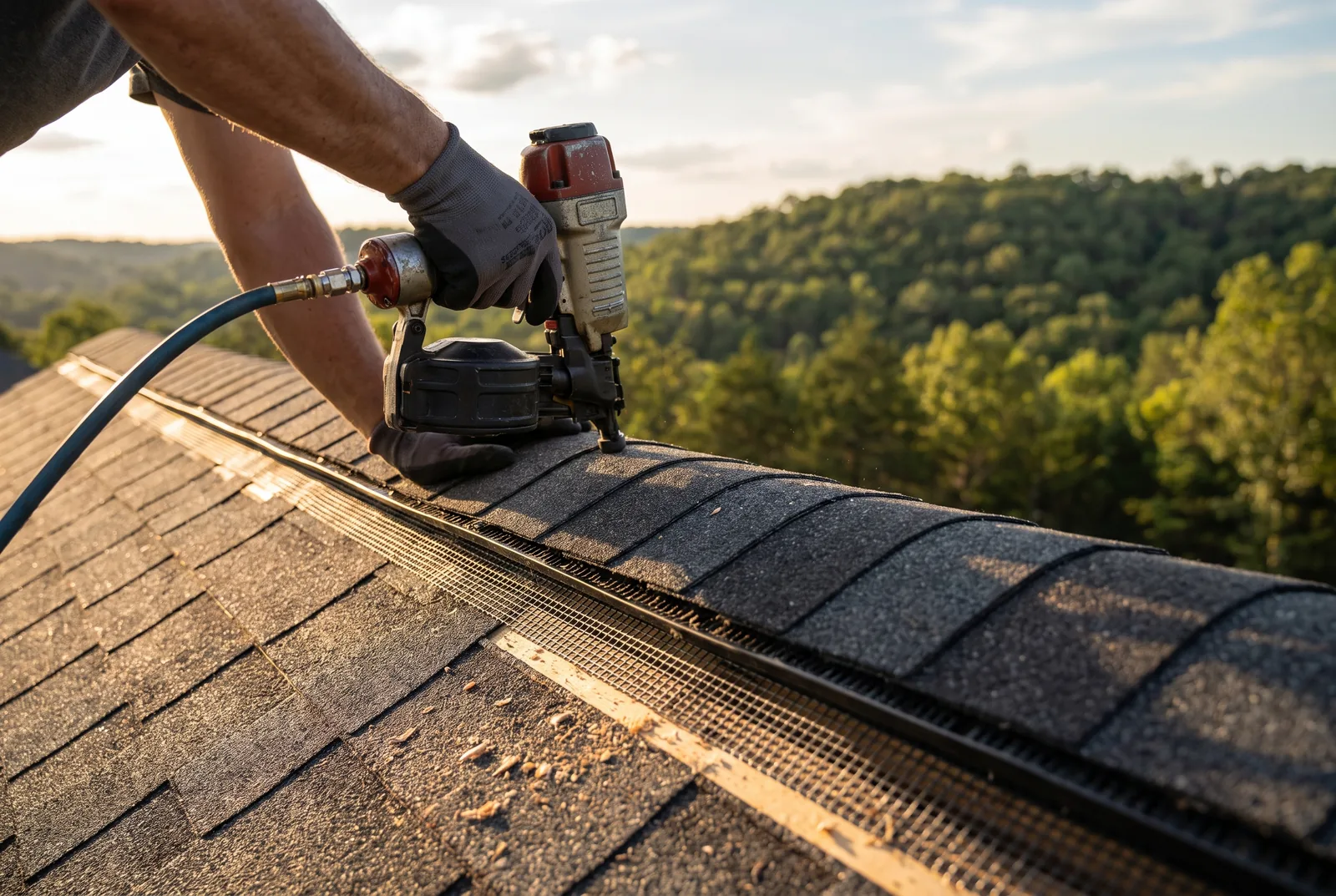
Ask why a fifteen-year-old shingle roof in Fayetteville looks thirty, and the answer is usually in the attic. Without balanced intake at the soffits and exhaust at the ridge, an attic under a dark roof in an Arkansas July runs 130 to 150°F, and that heat bakes the asphalt in the shingles from underneath until they cup, crack and shed granules a decade early. The same unvented attic in January holds enough house heat to melt the underside of the snow on the roof; the water runs to the cold eave, refreezes, and builds an ice dam that pushes meltwater backwards under the shingles and into the wall. The 2009 ice storm taught a lot of Fayetteville homeowners this the hard way.
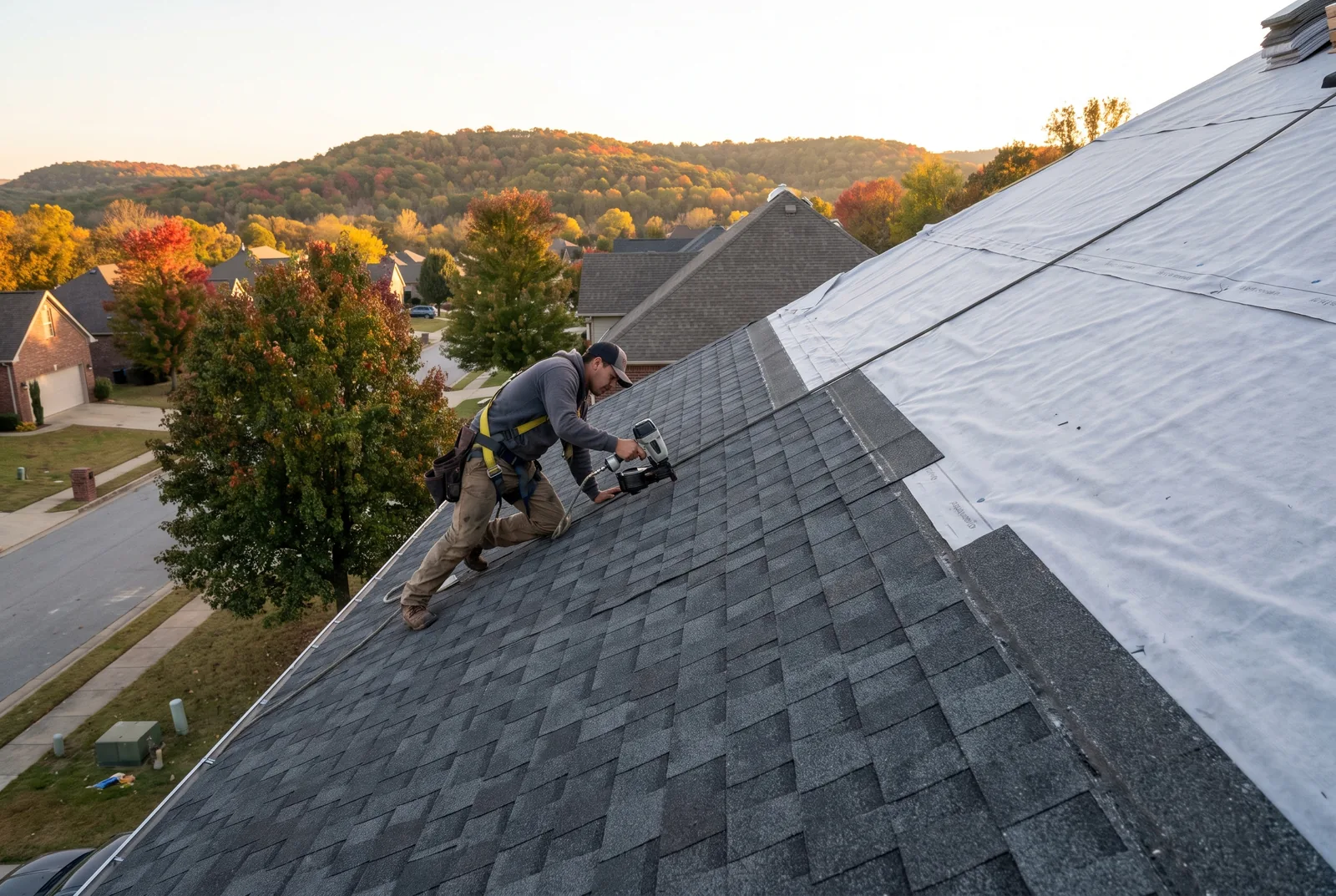
The fix is a system: continuous soffit intake with baffles so the insulation doesn't block it, a continuous ridge vent so hot and moist air leaves at the top, no bathroom fans dumping into the attic, and ice-and-water barrier under the shingles at every eave and valley so the roof is watertight even when a dam forms. We do it with a new roof or on an existing one, and we'll show you the temperature difference on a probe the same afternoon.
What's included
Ridge vent
Continuous, shingle-over ridge vent with an external baffle so wind-driven rain stays out.
Soffit intake & baffles
Continuous or panel soffit vents with rafter baffles that keep insulation off the intake.
Ice-and-water barrier
Self-adhering membrane at eaves, valleys and penetrations — the layer that makes an ice dam harmless.
Bath & kitchen fan routing
Exhaust fans ducted through the roof, not into the attic where the moisture rots the deck.
Ice-dam removal
Steam removal in winter without chipping the shingles; heat-cable coordination where dams recur.
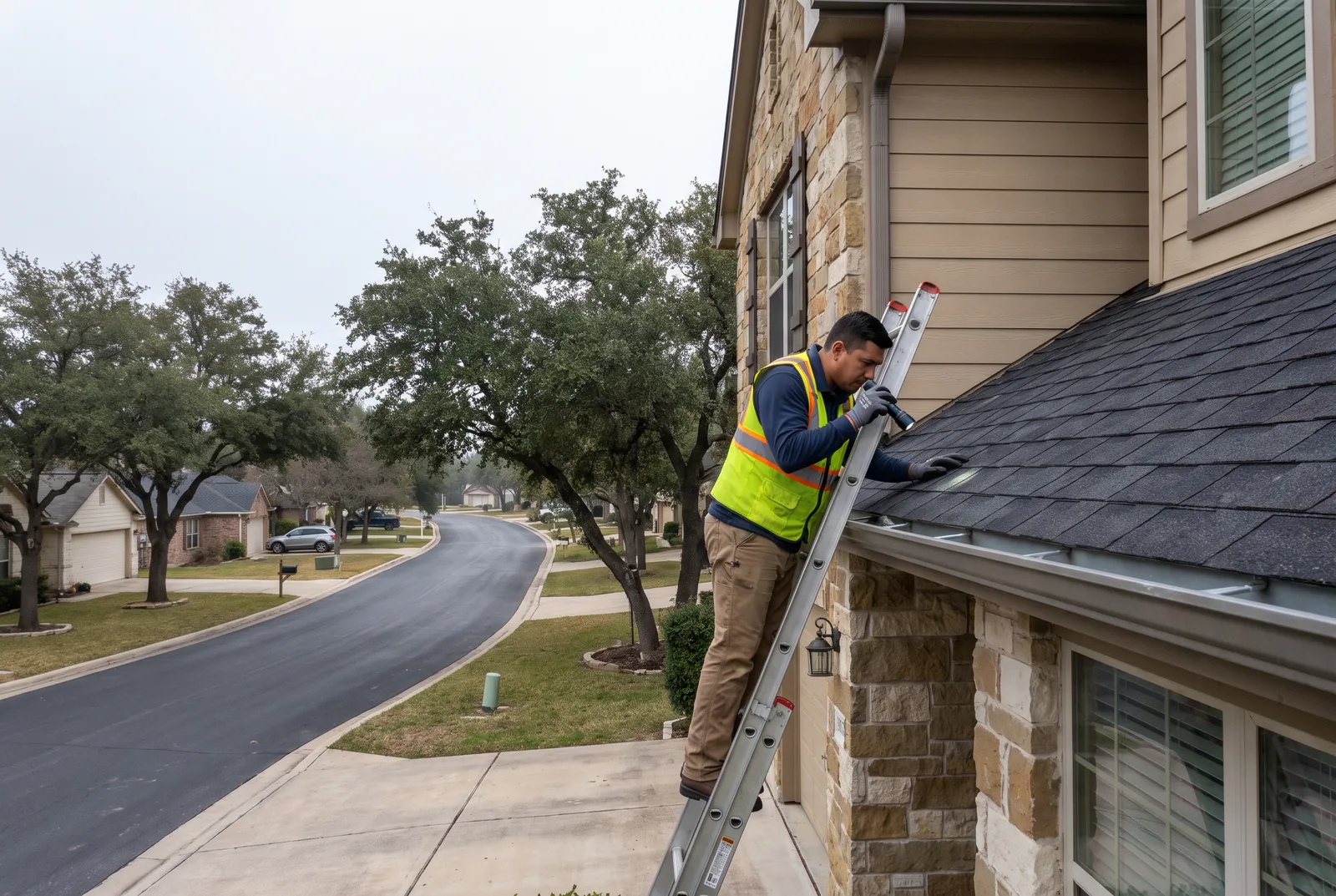
Attic assessment
Temperature, moisture, staining and airflow measured and photographed before and after.
Attic ventilation & ice dams cost in Fayetteville, AR
| Job | Typical price | Notes |
|---|---|---|
| Ridge vent, cut in and installed, per foot | $14 – $26 | Includes ridge cap |
| Soffit vents with baffles, per opening | $45 – $95 | Continuous strip priced by the foot |
| Ventilation package on a typical home (ridge + soffit + baffles) | $900 – $2,400 | Most of the benefit |
| Ice-and-water barrier at eaves and valleys (existing roof) | $8 – $14 per foot | Requires lifting the first courses |
| Exhaust fan rerouted through roof | $225 – $450 | Per fan |
| Ice-dam steam removal | $450 – $1,200 | January–February |
| Attic ventilation assessment | $95 – $175 | Credited toward the work |
These are 2026 Northwest Arkansas ranges so you can budget. Your written price is itemized — tear-off, decking, underlayment, ice barrier, flashing, vents, disposal, permit — and good for 30 days.
Recent work
Questions we get about attic ventilation & ice dams
How do I know if my attic is under-vented?
Shingles cupping or losing granules well before their rated life; an attic that's noticeably hotter than outside on a summer afternoon; frost or dark staining on the underside of the deck in winter; ice dams at the eaves; mould smell. Any one of those is worth the assessment.
Are powered attic fans a good idea?
Usually not. They pull conditioned air out of the house through every gap in the ceiling and can depressurize gas appliances. Balanced passive venting — soffit in, ridge out — does the job without a motor.
What causes ice dams in Fayetteville?
Heat escaping into the attic melts snow from underneath; the meltwater runs to the eave, which is below freezing, and refreezes. North-facing eaves under bare oaks, houses with no soffit vents, and roofs without ice barrier get them worst. Insulation, ventilation and ice barrier together stop them.
Do I need ice barrier in Arkansas?
Ice barrier at the eaves is required by code in northern climates; the Arkansas Fire Prevention Code leaves it to local history of ice at the eaves, and Fayetteville has that history. We install it on every roof we replace regardless.
Can you fix ventilation without a new roof?
Yes. Ridge vents can be cut into an existing roof, soffit vents added and baffles installed from inside. It's a one-day job on most homes.